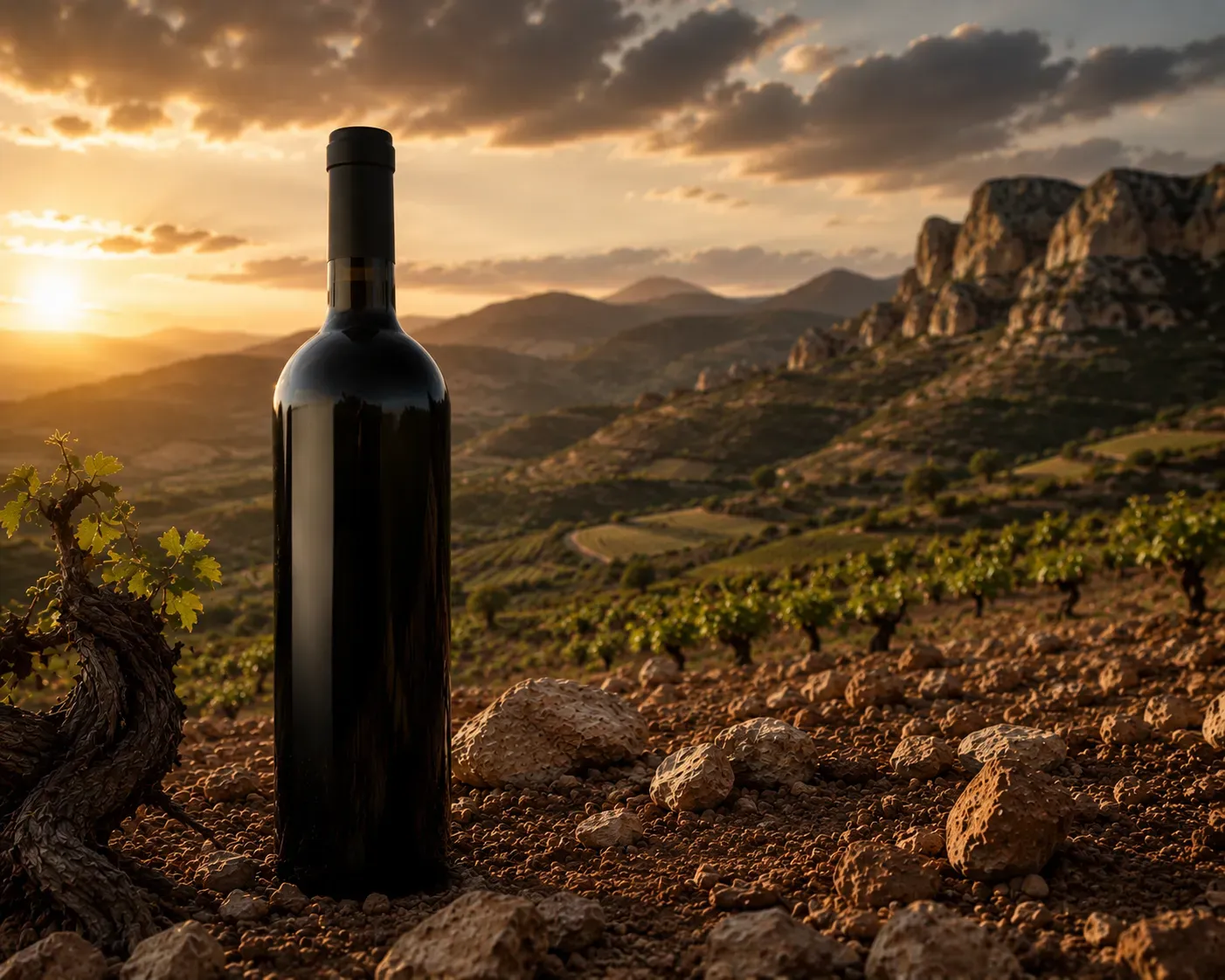

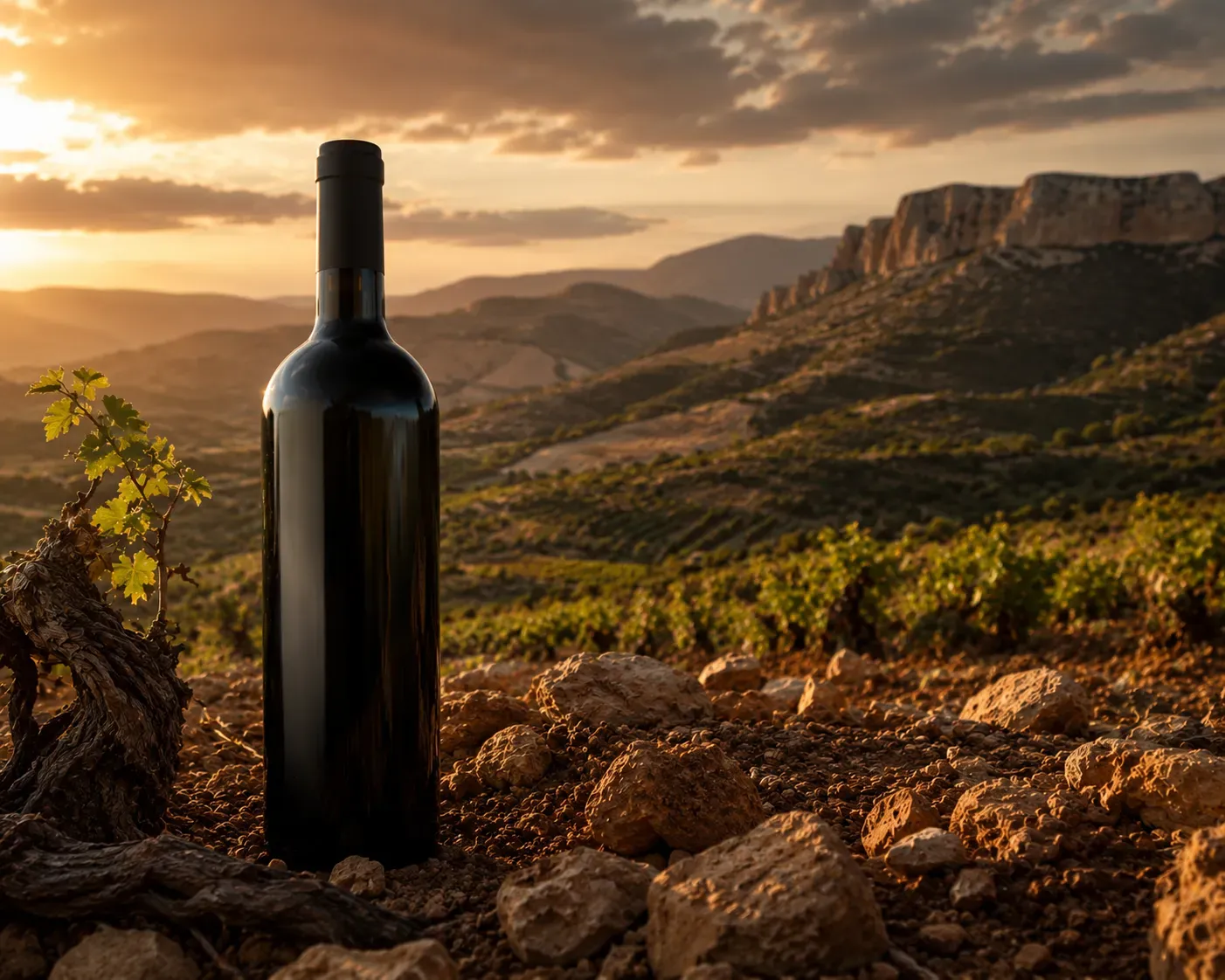
If you want a Spanish wine with no synthetic pesticide or glyphosate behind it, the word that is actually checked is organic. Pesticide-free and glyphosate-free are not regulated wine terms, so on their own they promise nothing, while the EU organic leaf is a farming claim someone inspects every year, and it bans synthetic herbicides, glyphosate among them, in the vineyard. The happy part for a Spanish list is that clean farming here is neither rare nor expensive: the country grows more organic vineyard than anywhere on earth, because dry, windy heat does much of the work chemicals do in damper regions. The honest part is that no bottle is residue-tested for you at the till, so the skill is reading the proof rather than the adjective.
What do pesticide-free and glyphosate-free mean on a wine?
Very little on their own, because neither is defined in wine law. Any producer may print clean-sounding language on a back label without a body to check it, which is exactly why the enforceable version matters. In the EU, organic is the regulated term that covers both field and cellar: no synthetic pesticides, herbicides or fertilisers on the vines, plus winemaking limits, and the European Commission’s organic framework mandates annual inspection before a wine may wear the green leaf. If a drinker means literally no synthetic sprays, that certificate is the closest readable guarantee, and it is the one I point people to instead of the front-label mood words. The full picture of what the leaf does and does not promise sits in the organic and biodynamic guide.
Where does glyphosate come into wine at all?
Glyphosate is a weedkiller sprayed on the ground under the vine row, not on the fruit, so its relevance is about residue rather than flavour. It has been the most argued-over molecule in European farming for a decade: the European Commission renewed its approval in November 2023 for ten years, to the end of 2033, a decision it took directly after member states failed to reach a qualified majority either way. The science body in the middle of it, EFSA, reported no critical area of concern in its 2023 peer review, while several governments and campaigners still contest it. For a wine buyer the practical line is simpler than the politics: organic farming forbids glyphosate outright, so a certified-organic wine is glyphosate-free by rule, and everything else is a case-by-case question.
Does organic mean no spraying at all?
No, and an honest buyer should know it. Organic rules ban synthetic pesticides and herbicides, but they still permit a short list of traditional treatments, above all copper and elemental sulphur against mildew and powdery mildew, the same materials growers have used for over a century. Copper in particular is under review precisely because it builds up in soil, which is why the better organic and biodynamic estates work to use as little as they can rather than treating the allowance as a target. So organic is not no-spray; it is no-synthetic-spray plus a disciplined, inspected short list, which is a more useful and more honest thing than the zero the word sometimes implies.
Does clean farming actually reach the glass?
This is the gap most clean-wine talk skips. A vineyard can be sprayed yet show almost nothing in the finished wine, because fermentation, racking and fining strip a great deal of what was in the field, and a wine can carry faint traces even from drift on the wind. Wine is a processed product, not pressed juice, and the OIV, which sets the international analytical standards for wine, treats residues as one measurable quality marker among many rather than a headline number. What does not exist is a per-bottle certificate of residues handed to the drinker, so chasing an absolute zero is a fool’s errand. The workable position is to buy farming you can verify and a producer you trust, and to let the certificate, not the slogan, carry the claim.
Why Spain makes clean wine easy and cheap
Climate does the heavy lifting. Fungal disease is the main reason a vineyard sprays, and it thrives in damp; much of Spain is dry, hot and swept by wind, which keeps mildew pressure low and lets growers farm with far fewer inputs than a maritime region needs. Add old bush vines, high-altitude sites and a long tradition of dry-farming, and organic conversion becomes an easy commercial decision rather than a sacrifice. That is why more than half of the wines we ship are certified organic, from a steel Albarino (sold out; in stock: O Fillo da Condesa) to an Extremadura Chardonnay and an Arlanza field-blend red, and why the green leaf on a Spanish shelf rarely carries the price premium it does further north.
| The claim on the bottle | Who actually checks it | What it guarantees in the glass |
|---|---|---|
| Organic, EU green leaf | Accredited inspectors, every year | No synthetic pesticide or herbicide, glyphosate included, in the vineyard |
| Pesticide-free or glyphosate-free, no logo | Nobody | A marketing line, unverifiable as written |
| Natural or low-intervention | No legal body | A cellar style, and it says nothing about sprays |
| Uncertified but clean-farmed | The grower, on trust | Often genuine in Spain, but you take it on their word |
Is organic wine tested for residues?
Not in the way the phrase implies. Certification audits the farming and the cellar, the practices and the inputs, with paperwork and site visits; it is not a lab report on your specific bottle. Official monitoring does exist at the market level, where national programmes sample wines and other foods against legal maximum limits, but that is a public-safety net across the category, not a promise printed for one drinker. So the organic leaf tells you glyphosate was not used, which is a stronger and more useful thing than a residue figure most buyers could not interpret anyway. If a number is what reassures you, the honest answer is that the discipline behind the leaf is that number’s more reliable cousin.
How do you buy clean wine without trusting a buzzword?
Read the leaf first, then ask for the factsheet, then judge the grower. A certified-organic steel Albarino drunk young tells you exactly what it is: clean farming, verified, in a fresh style. An uncertified bottle labelled natural might be farmed just as cleanly or not at all, because natural is a style with no legal definition and covers the cellar, not the vineyard sprays. The tell of an honest importer is a per-wine factsheet that states the certification rather than a website full of clean-living adjectives, and the wider set of diet-driven questions, from vegan fining to sulphites, has its own honest page.
The honest limits, said plainly
Glyphosate-free is not the same as additive-free, low-sulphite or low-histamine, and conflating them is the commonest mistake a nervous buyer makes; those are separate questions with separate answers. Conversion to organic takes three years, so a vineyard can farm clean long before it may say so, and many small Spanish growers never certify at all, which is true and unverifiable in equal measure. None of this is a health claim: it is farming information to help you choose, and anyone with a specific sensitivity should treat their own reaction as the authority. Within those limits, clean Spanish wine is one of the easiest honest asks in the shop, delivered across the Netherlands from the shop, for drinkers of eighteen and over.