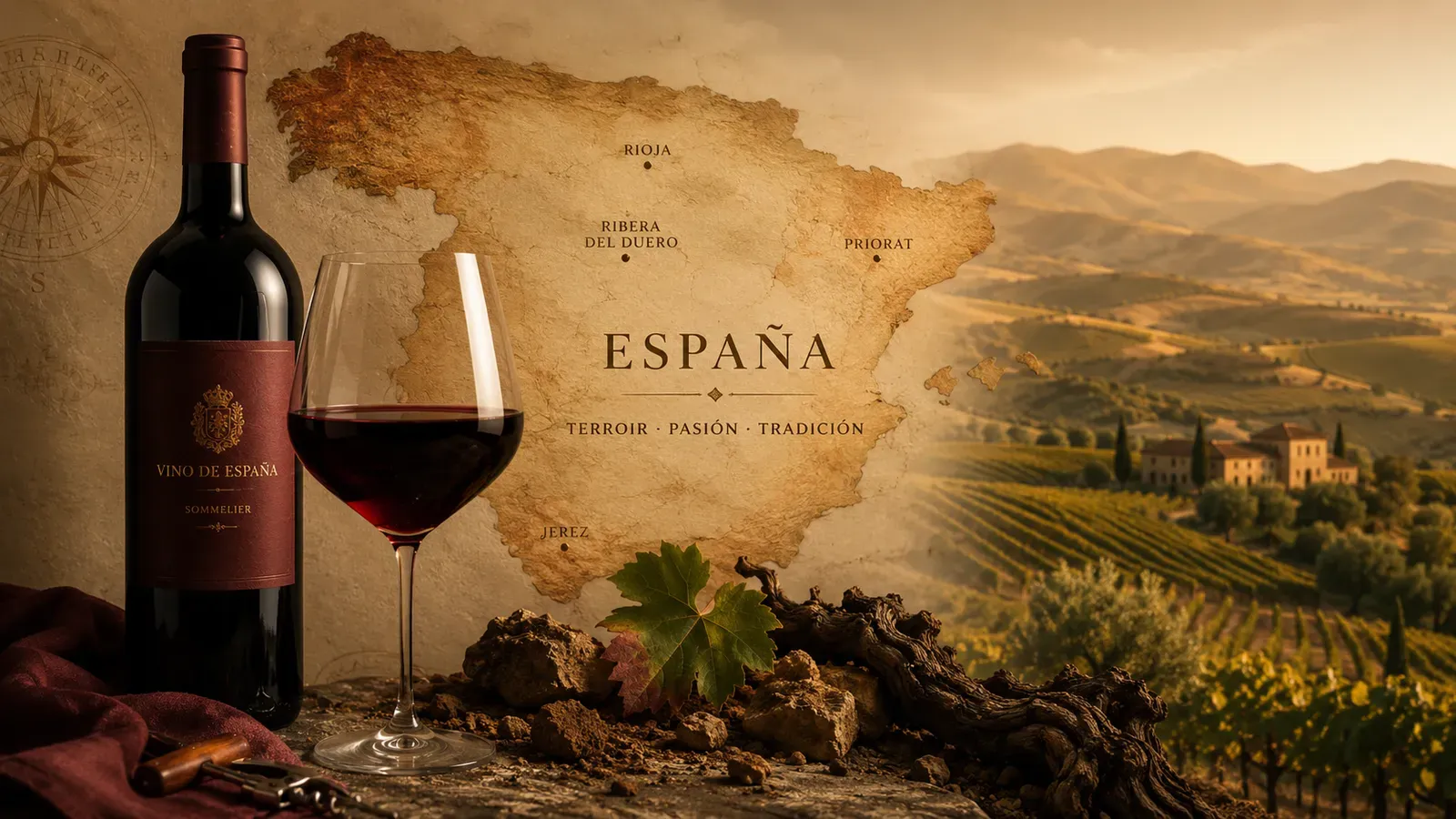

Dutch shelves treat Albariño and Verdejo as interchangeable Spanish whites, cold, fresh, next to the Pinot Grigio, and the shelves are wrong in a useful way. The two grapes grow seven hundred kilometres apart, in opposite climates, and answer different dinners. Knowing the split turns a coin-flip purchase into a choice, and on a wine list it turns one crowded slot into two working ones. The portfolio carries both arguments at old-vine level, La Trucha for the Atlantic and Shaya for the meseta, which makes the honest comparison easy to pour at home.
Two grapes, two Spains
Albariño lives in Rías Baixas on the green Galician coast, pergola-trained over granite, fog off the ocean most mornings, the DO’s conditions reading more like Ireland than the Spain of postcards. Verdejo lives in Rueda on the high meseta along the Duero, as its own DO documents, in gravel and sand under brutal continental light, where old bush vines survive on stubbornness and night harvesting preserves what the day would burn. Ocean grape, plateau grape: the geography is the tasting note before the cork moves.
The glasses, side by side
| In the glass | Albariño | Verdejo |
|---|---|---|
| Signature aromas | Lime, white peach, sea spray | Fennel, citrus pith, fresh-cut grass |
| Palate shape | Saline, vertical, tension | Rounder entry, bitter-almond finish |
| Acidity | High and marine | High and snappy |
| Texture potential | Lees and barrel age beautifully | Old-vine versions gain weight |
| One-word character | Coastal | Herbal |
The finishing move separates them blind: Albariño ends on salt, the taste of the glass asking for another oyster, while Verdejo ends on that signature almond-skin bitterness, the taste of the glass asking for another bite of something fried. Both finishes are features; neither grape is trying to be Chardonnay, and Wine Folly’s Verdejo profile rightly files that bitterness under personality rather than fault.
Which one for which table?
Albariño takes everything the sea sends: oysters, mussels, ceviche, white fish, the rice dishes of its own coast; the seafood-restaurant playbook is essentially its biography. Verdejo takes the green and golden table: asparagus and artichokes, which murder most wines and meet their match in fennel notes; salads with bite; fried fish and croquetas, where the bitter finish scrubs the palate; goat cheese; and the entire category of terrace drinking, where its rounder entry makes it friendlier without food than the more demanding Atlantic grape. Where the two overlap, simple white fish, either wins; where they specialise, swapping them shows.
How each is actually made
The cellars repeat the geography. Albariño’s serious producers work like white-Burgundy makers in raincoats: whole-bunch pressing, cool ferments, then the defining choice of months on fine lees, which feeds the mid-palate and explains why two Albariños at the same price can feel a category apart. Rueda’s craft happens earlier and at night: machine or hand harvest under floodlights at four in the morning, because Verdejo oxidises with enthusiasm and cold fruit is the whole ballgame; after that, steel and restraint for the everyday tier, old barrels and patience for the old-vine bottlings. Read the factsheet line on lees months and harvest method and you can predict the glass before opening it, which is most of what professionals actually do.
The supermarket trap, named honestly
Both grapes suffer the same commercial disease: their names sell, so the bottom shelf wears them loudly. Bulk Verdejo picked warm and bottled fast tastes of nothing but cold; bulk Albariño stretched to the legal limits keeps the price and loses the sea. The defence costs one glance: a producer’s name rather than a brand’s, a vintage on the label, and ideally a vineyard age or lees note on the back. The difference between a €6 and a €13 Verdejo is not 7 euros of marketing; it is night harvesting, old vines and someone’s surname, and it is the cheapest quality leap in Spanish white wine.
A worked table: one tapas spread, both bottles
Set the test at one table: olives, boquerones, padrón peppers, croquetas, garlic prawns, a wedge of Manchego. The Albariño meets the boquerones and prawns like family, salt finding salt, but stumbles slightly on the croquetas, where it has acidity and no scrub. The Verdejo flips the scoreboard: its bitter finish makes the croquetas and padróns sing, handles the Manchego’s fat, and merely accompanies the seafood politely. Neither bottle loses; the table simply reveals which half of the menu each was built for, and a host who serves both has accidentally staged the most instructive tasting in Spanish white wine for under thirty euros.
The list and the by-the-glass economics
On a working list the two grapes hold different slots rather than competing for one, and the slot map treats them so: Albariño as the seafood-leaning glass, Verdejo as the all-purpose white pour whose old-vine versions hold their shape for days. The money question favours Verdejo slightly at the entry tier, Rueda’s scale keeps prices kind, while Albariño’s prestige supports a higher card price for the same margin math. The honest play for most Dutch menus: Verdejo by the glass for volume, Albariño by the glass the moment the menu leans maritime, both by the bottle always.
Ageing: the surprise round
Conventional wisdom drinks both young, and conventional wisdom leaves the best glasses on the table. Lees-aged and barrel Albariño gains salted-butter breadth over three or four years, the special-whites shelf documents the transformation, while old-vine Verdejo from serious producers rounds into something closer to white Bordeaux, its herbal snap mellowing into beeswax. Neither is a marathon runner like white Rioja, but both reward the buyer who hides a second bottle, and both embarrass the assumption that Spanish white means drink-this-year.
The verdict, honestly
For the seafood table, the raw bar, the maritime menu: Albariño, without a second thought. For the terrace, the vegetable-forward kitchen, the fried and the green: Verdejo, and save the difference. For one all-purpose white slot serving an unpredictable menu: Verdejo’s flexibility edges it; for one white slot that has to impress: Albariño’s salinity is the more memorable argument. The two-bottle answer remains the best one: pour La Trucha and Shaya side by side, same evening, and let the coast and the meseta argue it out at the table; both ship documented from the shop.
The duel is one chapter of a longer story: the full map of Spanish answers to the classics runs from Champagne to Bordeaux.