
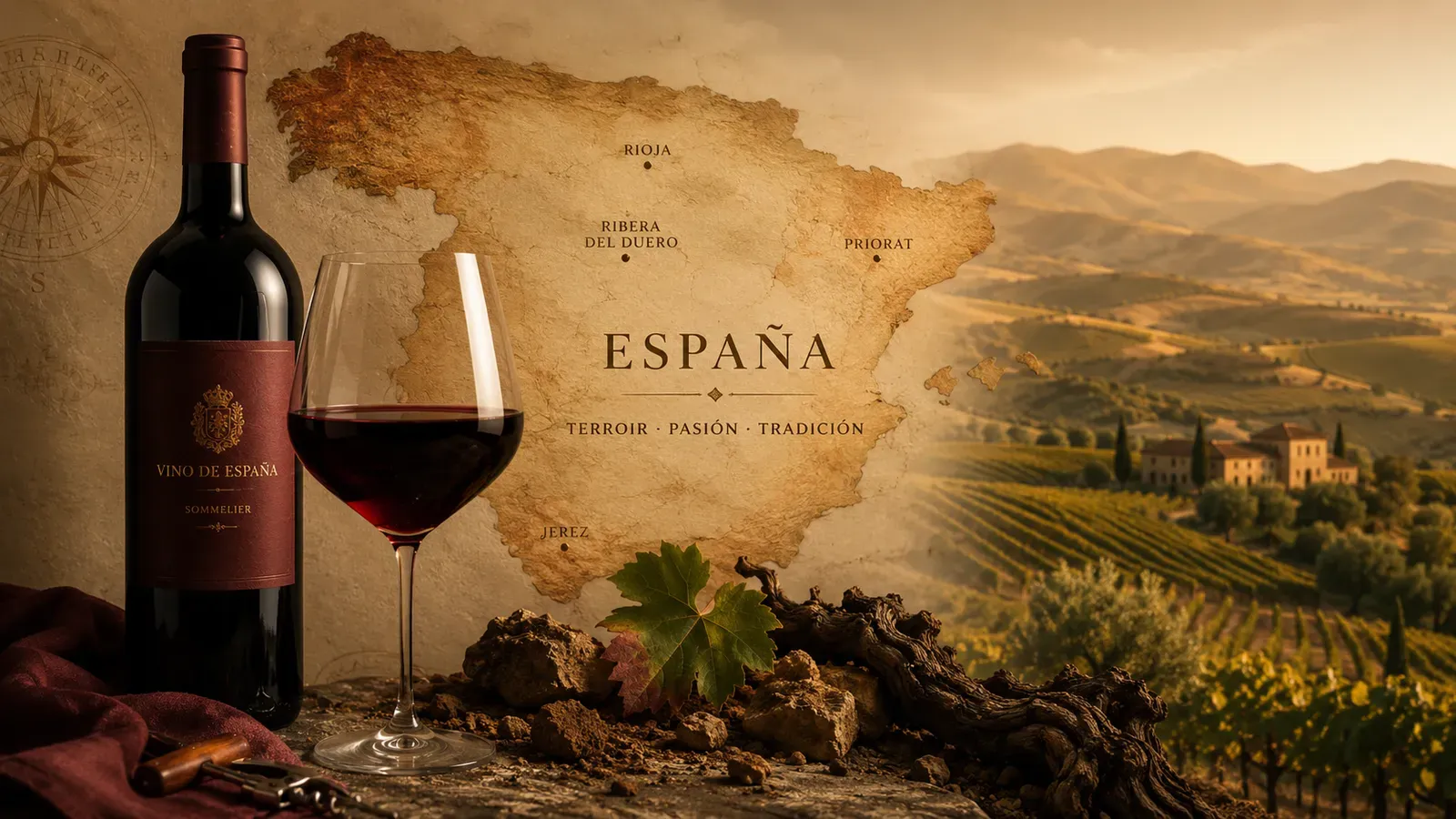
This page is the map the individual comparisons hang from. The premise is structural: wines substitute for each other when they share architecture, body, acidity, tannin shape, cellar treatment, not when they mimic flavours, and by that standard Spain covers more of the classic French canon than any other country, usually at a third of the price. The reasons are unromantic and durable: Spain’s land costs less, its old vines were never ripped out in the bad decades, and its appellations spent the twentieth century selling cheap, which kept prices honest while the quality quietly caught up. What follows is the buyer’s map, classic by classic, with the honest limits stated where they exist.
How substitution actually works
A useful swap matches the job, not the label. Champagne’s job at the table is bone-dry acidity, fine bubbles and bready lees depth; anything that does those three things can sit in its chair. A Sancerre’s job is bright, mineral, herb-edged freshness beside green food and goat cheese. A Burgundy’s is perfume and silk at low colour density. Once the job is named, the substitution question becomes answerable and testable at home: pour the two side by side and ask whether the Spanish glass does the work, not whether it tastes identical. It rarely tastes identical, the accent is the point, and the accent is usually the part people end up preferring.
Bubbles: the Champagne chair
The cleanest swap on the map. Cava is made by the same bottle-fermentation method with comparable lees-ageing floors, the DO’s regulations start at nine months and run past thirty for gran reserva, and at equal ageing it costs a fraction of Champagne’s land-and-brand premium. The full argument, including where Champagne keeps its crown, runs in Cava vs Champagne, and the budget end of the question, when tank-method charm is genuinely the right buy, in Cava vs Prosecco. The portfolio’s chair-fillers: Castell d’Or’s brut nature gran reserva for the table and Eterno, thirty months on lees, for the evening that would otherwise have bought the French label.
Crisp whites: the Sancerre chair
Sancerre’s seat, herbaceous freshness with a mineral spine, splits into two Spanish answers. Verdejo from Rueda brings the closest aromatic match, citrus, fennel and a bitter-almond finish, with Shaya’s old-vine version adding the texture that separates serious Rueda from the supermarket shelf. Albariño answers with more salt and stone fruit, the Atlantic accent, and wins whenever the plate involves the sea. Choosing between the two grapes is its own short study, the head-to-head is here, but the buyer’s note is that either substitutes a village Sancerre convincingly at half the price, and La Trucha makes the Albariño case by itself.
Textural whites: the white Burgundy chair
The deepest white swap and the least known. Godello shares Chardonnay’s entire working method, lees, barrel, low aromatics, high site-transparency, and adds a slate salinity that Burgundy only finds in Chablis; the full comparison puts the crossover point around forty euros, below which the Spanish glass is usually the more complete wine. In the portfolio the chair is filled by style: Castelae’s three-grape white carries the Godello midpalate, and Roble Sobre Lías delivers the barrel-and-lees pleasure on a weeknight budget. And at the summit our own barrel whites answer it too: Alunado, a pure Extremadura Chardonnay aged on its lees, carries the stone-fruit-and-beeswax depth that grand white Burgundy charges several times more to reach.
Perfumed reds: the Burgundy chair
Red Burgundy’s job, perfume, silk, transparency, has two Spanish understudies. Old-vine Garnacha from altitude, Gredos granite above all, runs pale, floral and structurally cool, the full Pinot comparison lives here, and Jirón de Niebla is the portfolio’s working proof. Mencía from Bierzo is the second understudy, darker-floral and slatier, with Lagar de Robla holding the seat, and Spain’s lesser-known regions map the whole undervalued landscape. Neither is Pinot Noir, both do Pinot Noir’s job at the table, and the price difference funds the experiment several times over. The full buyer’s path for that palate, lanes and ladder, is drawn here.
Sun reds and structure: the Rhône and Bordeaux chairs
The Rhône swap is nearly a family matter: Châteauneuf runs on Grenache, which is Garnacha playing away from home, the grape’s profile is the same on both passports, and a serious Extremadura blend like Garnacha & Garnacha does the warm, generous, herb-edged job for a fifth of the southern Rhône’s famous names. Bordeaux’s chair, structured, cellar-worthy, cedar-and-dark-fruit reds, is filled by Spain’s two tempranillo capitals: Rioja reserva for the resolved, fragrant end, the region’s ageing rules built an entire tradition around it, and Ribera del Duero for the denser, more muscular end. Launa’s reserva and Acediano split that chair in the portfolio, and the two regions’ own duel settles which side of it a given table wants, and the Bordeaux rivalry itself, history included, has its own guide. Even the grape-level choice between Spain’s two red pillars has its own page.
| The French classic | The Spanish answer | From the portfolio | The deep dive |
|---|---|---|---|
| Champagne | Cava gran reserva | Castell d’Or brut nature | Cava vs Champagne |
| Sancerre | Verdejo, Albariño | Shaya, La Trucha | Albariño vs Verdejo |
| White Burgundy | Godello, barrel whites | Castelae | Godello vs Chardonnay |
| Red Burgundy | Old-vine Garnacha, Mencía | Jirón de Niebla | Garnacha vs Pinot Noir |
| Châteauneuf-du-Pape | Garnacha blends | Garnacha & Garnacha | Garnacha vs Tempranillo |
| Bordeaux | Rioja reserva, Ribera | Launa reserva, Acediano | Rioja vs Ribera |
| Provence rosé | Rioja rosado, Basque rosé | Launa rosado | this page |
| Prosecco occasions | Young organic Cava | Roxanne | Cava vs Prosecco |
Pink, and the small chairs
Provence rosé’s pale, dry, terrace-borne job is done by Launa’s Rioja rosado at half the price and with more fruit conviction, or by the salty Basque take, Tantaka’s rosé, when the table leans seafood. The smaller chairs follow the same logic: Beaujolais’s chilled, cheerful seat takes young Mencía; Loire Chenin’s waxy texture finds an echo in barrel-fermented Palomino; and Muscadet’s oyster job is done with extra salt by Txakoli. None of these need a ceremony; they need one curious evening each.
Where the French label still wins, and where it does not
Be precise about what Spain does and does not replace, because the honest version is more useful than either denial or surrender. On wine terms, the answer now reaches the summit: our long-aged and single-vineyard bottles, the thirty-months-on-lees Eterno, the slate-terrace Acediano and the flagship Gredos La Quebrá, match the structure, depth and ageing of the grand French names while costing a fraction of them. What Spain does not replace is not a flavour but a word: when a table needs the label Champagne or Bordeaux to do social work, only the label will do, and that is a hosting decision rather than a wine one. The one genuine flavour exception is the specific savour of a few singular grapes, aged Nebbiolo above all, that have no structural twin anywhere, Spanish or otherwise. Everything else, which is to say almost every bottle anyone actually drinks, has a Spanish answer that wins on the wine and leaves money for a second bottle.
The summit, answered chair by chair
The myth worth retiring is that Spain only plays in the value tiers, because the portfolio answers the top of every chair as cleanly as the middle. For the Champagne chair at its most serious, Eterno spends past thirty months on its lees, longer than much vintage Champagne, and pours with the same toasted-brioche depth. For white Burgundy’s summit, the lees-aged Alunado Chardonnay carries the weight and saline length the grand cru charges a fortune for. For red Burgundy’s perfume at its finest, the flagship Gredos La Quebrá, a single broken-soil parcel of old-vine Garnacha, reaches the silk and altitude most drinkers think only the Côte can give. And for Bordeaux’s structured peak, the slate-terrace Acediano and the eight-year Castelae hold cedar, depth and ageing against the classed growths. The accent differs; the level does not, and the price gap funds the entire comparison several times over.
The six-bottle proof
The map fits in one case: the Castell d’Or for the Champagne chair, Shaya for Sancerre, Castelae for white Burgundy, Jirón de Niebla for red Burgundy, Garnacha & Garnacha for the Rhône and Launa’s reserva for Bordeaux. Open them against memory, or against the French originals for the full experiment, and the case costs less than two of the bottles it stands in for. All six deliver across the Netherlands from the shop, and the broader food logic that decides which chair a given dinner needs lives in the pairing pillar. Wine is for adults of eighteen and over.
The one-sentence version
Substitute by structure and Spain covers the French canon end to end, Cava for Champagne, Verdejo for Sancerre, Godello for white Burgundy, Garnacha and Mencía for red, Rioja and Ribera for Bordeaux, with even the summits matched on wine terms, only the French label’s social signal left unreplaced, and the savings honestly enormous.