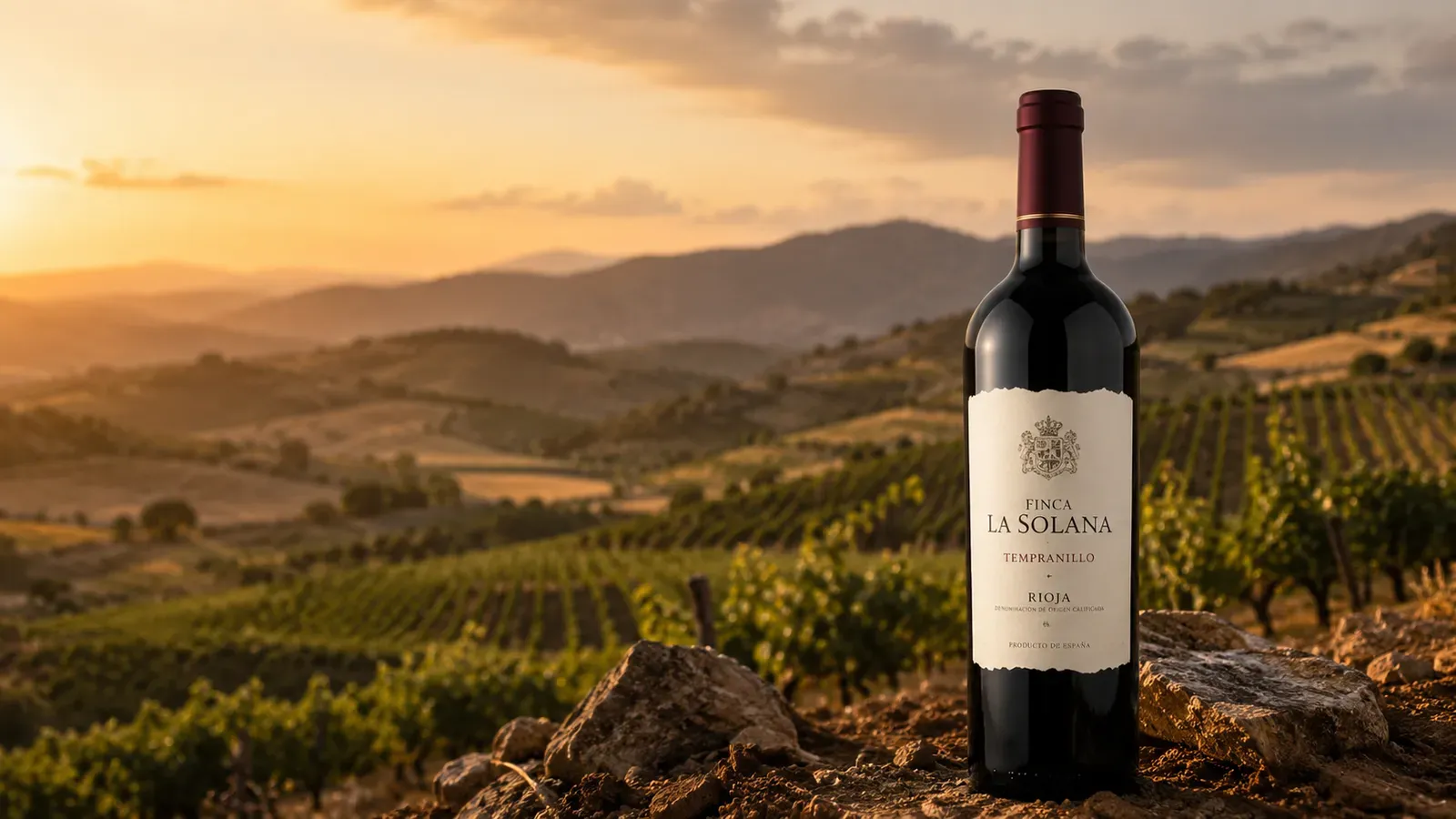

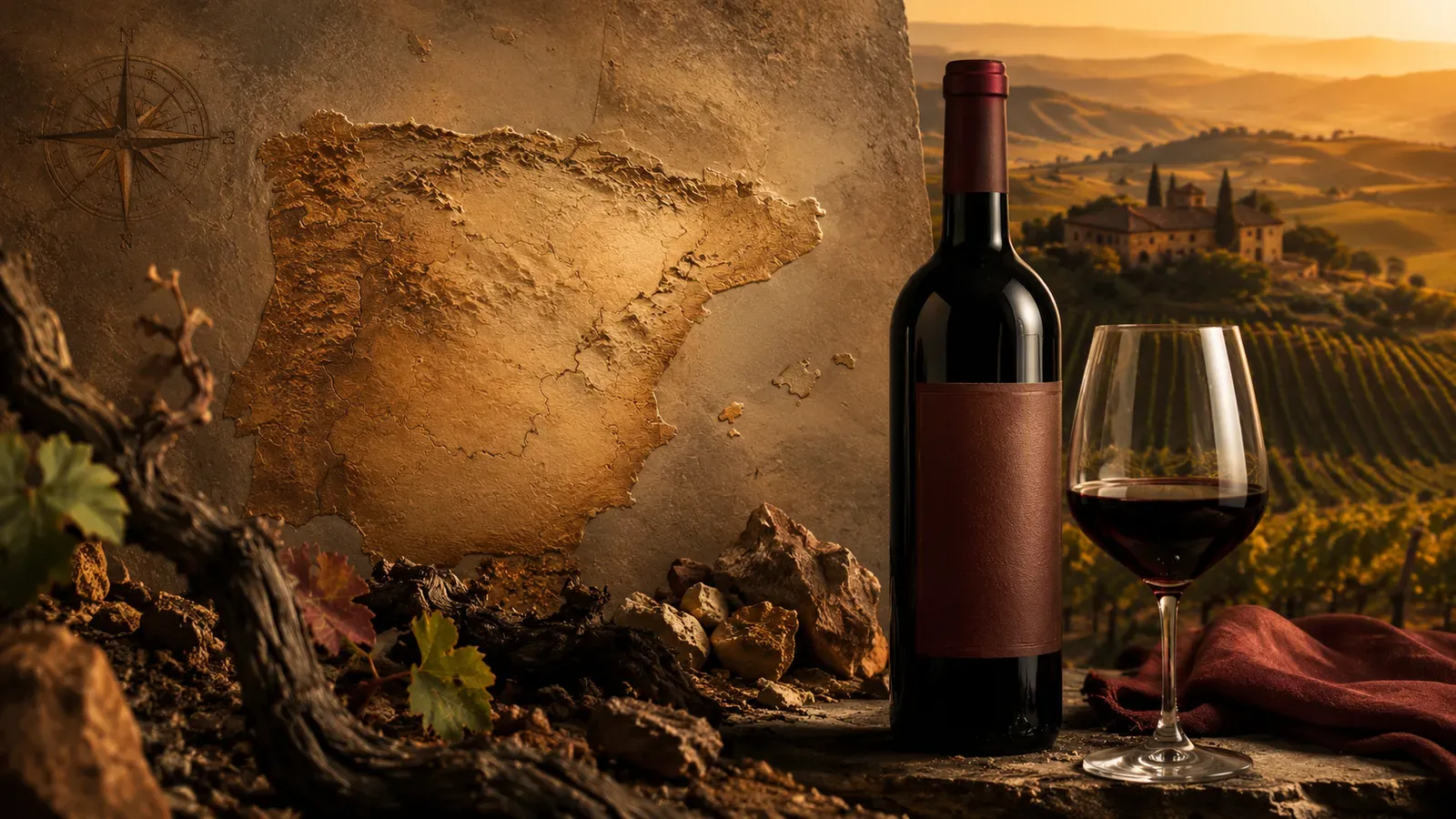
Ask most people to name a Spanish wine region and they reach Rioja, then maybe Ribera del Duero, and stop. Those two are wonderful and famous, but they are the edge of a far larger and more interesting map. Spain’s most thrilling wines, and its best values, come increasingly from small, old, often mountainous regions that the international market is only now discovering: places with century-old vines, dramatic soils and a quality that has run ahead of their fame and their prices. For a drinker who knows the famous names, these regions are the natural next step, and Spain’s own trade body, Foods & Wines from Spain, maps a country far deeper than its headline denominations. This page is a guided tour of the ones worth knowing first.
Why the unknown regions are the exciting ones
There is a pattern to Spain’s hidden gems, and it explains the value. These regions tend to be small, high and old: vineyards on steep slate or granite at altitude, worked by smallholders, planted with vines that were never ripped out in the twentieth century because the land was too poor to industrialise. That combination, old vines, distinctive soil, cool altitude, is exactly what makes wine of character, the same terroir logic the terroir page runs in full. And because their fame has not caught up to their quality, the prices lag, so these regions offer the rare thing in wine: genuine character at honest money. The famous regions sell their name; the lesser-known ones still sell the wine.
Bierzo and Ribeira Sacra: the Mencía heartland
In Spain’s green northwest, two small regions are quietly making some of the country’s most exciting reds from Mencía. Bierzo, on slate slopes between Galicia and Castile, where its council maps a cool, Atlantic-influenced terroir, grows floral, mineral, Burgundian-feeling reds that have made it a critics’ darling. Ribeira Sacra, on terraces so steep above the Sil and Miño rivers that the viticulture is called heroic, makes even tenser, more vivid versions. Both are the obvious first stop for a drinker who loves Pinot Noir or Burgundy, the pale, perfumed end of Spanish red, and Lagar de Robla is the portfolio’s door into Bierzo Mencía.
| The region | Grows | Why it matters |
|---|---|---|
| Bierzo | Mencía, Godello | Slate, floral and Burgundian, critics’ favourite |
| Ribeira Sacra | Mencía | Heroic terraces, tense and vivid reds |
| Gredos | Old-vine Garnacha | High granite, pale and perfumed |
| Arlanza | Tempranillo, field-blend whites | Burgos altitude, old vines, undervalued |
| Valdeorras | Godello | Spain’s textural white answer to Burgundy |
| Getariako Txakolina | Hondarrabi Zuri | Bone-dry, spritzy Basque coast white |
Gredos and Arlanza: altitude reds
Inland, two high regions are rewriting what Spanish Garnacha and the central plateau can do. Sierra de Gredos, the granite mountains west of Madrid, grows old-vine Garnacha at up to a thousand metres that comes out pale, floral and structurally cool, the wine that converts Burgundy drinkers, and Jirón de Niebla is the portfolio’s Gredos bottle. Arlanza, on the high plains of Burgos, is even less known: cool nights, old vines and a tradition of field-blend whites and structured reds, undervalued precisely because few have heard of it, and Castelae brings its three-grape white and the pie franco Garnacha its ungrafted reds. Both regions prove the same point: altitude is Spain’s secret weapon, giving ripeness by day and freshness by night.
Galicia’s whites and the Basque coast
Spain’s most distinctive whites come from regions most drinkers cannot place. Valdeorras, in eastern Galicia, rescued the Godello grape from near-extinction and now makes textural, mineral whites that stand against white Burgundy, the full case for Godello runs in detail, and the DO’s council documents the revival. Rías Baixas is better known for Albariño, but its neighbours, Ribeiro, Monterrei, are not. And on the Basque coast, Getariako Txakolina makes bone-dry, faintly spritzy Txakoli, poured high into the glass, that is one of Spain’s great seafood whites, Tantaka’s white the portfolio’s example. These regions share Galicia’s Atlantic cool and the same under-the-radar value as the inland reds.
The Mediterranean and southern surprises
The map runs south as well, into regions whose reputations have not caught up to their new wines. Jumilla and Yecla in the warm southeast, long dismissed as bulk country, now make serious Monastrell, dense and dark yet increasingly fresh as growers work the higher, older vineyards. Valencia’s uplands, where Bobal and old-vine field blends grow, are quietly excellent and the home of the portfolio’s Las Ocho, eight grapes in one Valencian bottle. Even Madrid has a denomination, Vinos de Madrid, reaching into the Gredos foothills for the same pale Garnacha that has made its mountain neighbour famous. The lesson holds across the whole country: the regions without big reputations are precisely where a curious drinker finds the most wine for the money, because nobody is paying for the name yet.
Where to start, and the explorer’s case
The best way into Spain’s hidden regions is a mixed case that crosses them: a Bierzo Mencía, a Gredos Garnacha, a Valdeorras-style Godello, an Arlanza white and a Txakoli, each a window into a region the famous names overshadow. From the portfolio, Lagar de Robla, Jirón de Niebla, Castelae and Tantaka’s white make exactly that tour, delivered across the Netherlands from the shop. For the drinker who has worked through Rioja and Ribera, these regions are where Spanish wine gets genuinely exciting again, and the broader buyer’s map of Spain’s substitutions for the French classics shows how far the value runs. Wine is for adults of eighteen and over.
The grapes these regions brought back
The most romantic part of the story is that several of these regions did not just rise, they rescued a grape from the edge of extinction. Godello, now Spain’s textural answer to white Burgundy, was down to a few hectares in Valdeorras in the 1970s before a small group of growers brought it back, and it carries that near-miss in every mineral, ageworthy glass; our Castelae white blends it into a three-grape Arlanza bottle. Mencía spent decades dismissed as a thin bulk grape until Bierzo’s growers proved that old vines on slate make floral, mineral, Burgundian reds, the discovery our Lagar de Robla carries. Old-vine Garnacha in Gredos survived only because the granite slopes were too steep to clear, and is now one of Spain’s most collectable reds, the story behind our Jirón de Niebla. Even ungrafted, pre-phylloxera vines persist in pockets like Arlanza, where our pie franco Garnacha grows on its own original roots. Each bottle is a grape that almost disappeared, which is part of why these regions feel alive in a way the famous names no longer need to.
How to read a region you cannot pronounce
Buying from an unfamiliar region is less daunting than it looks once you know the signals that matter. Altitude is the first: a label or factsheet that names six, eight or a thousand metres is telling you the wine has the cool-night freshness that altitude buys, the quality these regions are built on. Old vines are the second: the words for old-vine, or a stated vine age, signal the low yields and deep roots that make character, and they matter more here than the vintage. A village or single-parcel name rather than only the broad region is the third, the sign of a grower working for place over volume. And the small-grower signal itself, a family name, a tiny production, a council mark from one of the lesser denominations, is usually a better quality predictor than any score. The factsheet behind each of our bottles states the altitude, the soil and the vine age the label only hints at, which turns a wall of unpronounceable names into a map a curious drinker can actually read. Start with one bottle whose story you like and the next region becomes easier every time.
The one-sentence version
Beyond Rioja and Ribera, Spain’s small, old, high regions, Bierzo and Ribeira Sacra for Mencía, Gredos and Arlanza for Garnacha, Valdeorras for Godello, Getariako for Txakoli, offer the country’s most exciting wines at prices that have not caught up to the quality.