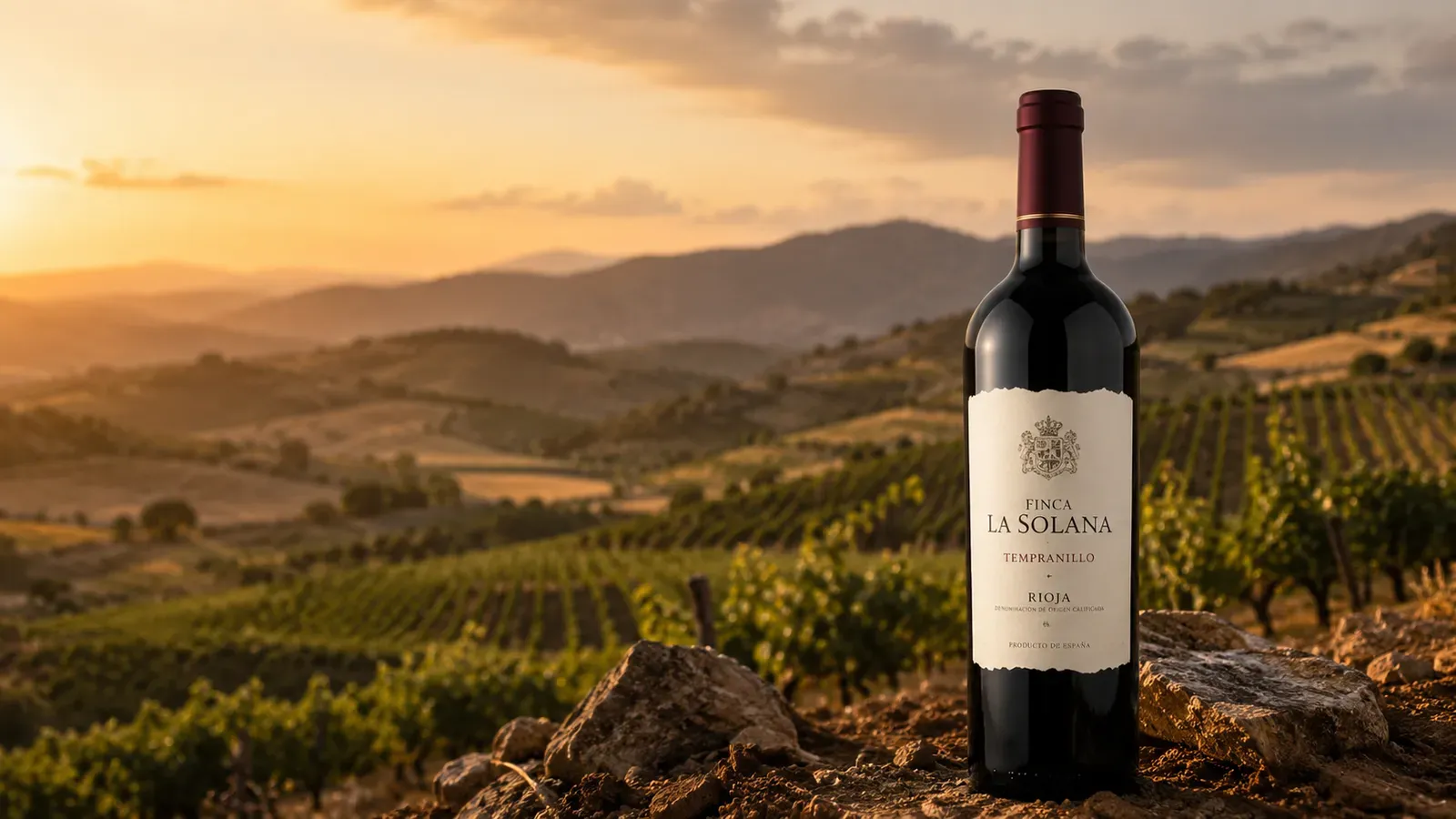


Most wine-supplier searches start after something went wrong: a pour that changed character between cases, a delivery that missed Friday prep, a list that reads like every other list on the street. Spanish Terroir supplies Amsterdam horeca from its own Spanish portfolio, imported directly from family wineries, with a trade account from €350, a producer factsheet behind every bottle and the by-the-glass thinking already done. That is the recommendation; the rest of the page is the homework that lets you check it, because a supplier should be chosen on operations first and romance second.
What does a restaurant actually need from a wine supplier?
Six things decide whether a supplier works for a working floor. Delivery windows that match prep hours, not office hours. Stock continuity, so the wine a guest loved in March still exists in May. Vintage discipline: when the year changes, you hear it before the case arrives, with the new factsheet attached. Pour-cost math that survives a quiet Tuesday, which is a style question as much as a price question. A technical sheet for every bottle, because sulfite and allergen questions land during service, not before it. And one human who picks up: not a portal, a person. Price matters, but it is sixth on this list for a reason; the cheapest case is expensive on the night it is not there.
The scene that tests all six at once is the Friday of a fully booked weekend: the white that arrives warm at five, the vintage that quietly changed, the sulfite question from table six. A supplier is what happens in that moment, not what the catalogue promised.
Specialist importer, wholesaler or webshop?
The honest comparison is about what each model is built for.
| Option | Built for | Strongest at | Weakest at |
|---|---|---|---|
| Specialist Spanish importer | Lists that need identity and documentation | Producer depth, technical sheets, list guidance | Bulk basics at the lowest price |
| Horeca wholesaler | Volume across every category | Price, one-stop logistics | Interchangeable wines, little story |
| Wine webshop | Convenience and breadth | Browsing, gifts, one-off bottles | Trade terms, continuity, floor support |
A wholesaler is the right call when the brief is volume: house pours by the pallet, every category on one invoice. The specialist earns its place when the Spanish section has to mean something: producers with names, a by-the-glass program built to sell rather than to sit, and somebody who knows why the Mencía replaced the crianza this year. Most serious venues quietly use both.
What should a tapas bar, an oyster bar or a boutique hotel pour?
A tapas bar lives by the glass: our saline Chapirete, an Albariño with real acidity, and a young unoaked Tempranillo served cool, the grape Wine Folly profiles as Spain’s calling card and the floor knows as the bottle that empties first. An oyster bar needs the Atlantic shelf: Albariño from DO Rías Baixas, where granite soils and sea fog build the salinity shellfish ask for, with our saline Chapirete beside it for the table that knows. A boutique hotel buys differently: one list serves breakfast guests, a bar shift and a room-service card, so it leans on a grower Cava, one serious white, one serious red and nothing that needs explaining twice.
A brown café or a twenty-seat wine bar has the opposite problem of the hotel: it needs three Spanish wines that carry an evening, not thirty that carry a cellar. Breadth is the supplier’s job; the bar only borrows it. The pattern across every venue type: Albariño does more work on a Dutch floor than any other single Spanish grape.
Private clubs and food-and-beverage directors running several outlets ask a different question again: not which wine, but which range holds its identity across a brasserie, a bar and a banqueting floor at three price points. That is a portfolio conversation, and it is the strongest argument for a supplier whose producers run from an aperitif Cava to a cellar-worthy single vineyard without the wine changing hands along the way.
What does a fair by-the-glass price look like?
A bottle at €10.50 ex-VAT pours six glasses of 125 ml: €1.75 in the glass. At a pour cost of 25 to 30 percent, that is a glass at €6 to €7 on the card, margin earned without anyone feeling processed. The trap is solving the math with a worse bottle: the €7 glass nobody reorders is more expensive than the €8 glass that sells a second round. Open-bottle life belongs in the same calculation; a wine that holds three days pours profitably on a Tuesday, while one that fades overnight only ever works on a weekend card.
Can you build an organic Spanish list?
Easily, and Spain is the right country to build it from: no country farms more organic vineyard, a point ICEX’s Foods and Wines from Spain keeps making to buyers who still file organic under niche. In the Spanish Terroir portfolio, 39 of the 69 wines are certified organic, and the certification stands on the producer factsheet rather than on a shelf-talker. For biodynamic or natural-leaning bottles, ask per wine; the honest answer differs per producer, and a supplier who answers per wine is exactly the kind worth keeping.
How do trade terms work at Spanish Terroir?
A trade account orders from €350, ex-VAT like every price on the site; below that, delivery is charged at €15. Orders run through the B2B portal, invoicing is handled by a person, and every wine ships with its producer factsheet: vintage, soils, élevage, certification. The limit to know in advance: this is a portfolio of artisan production, not a warehouse of infinite depth. Small-production wines have real allocations, which is why stock continuity is a conversation rather than an assumption: say what the list needs for the season, and the season gets planned producer by producer.
Which questions sort suppliers in one phone call?
Five, asked in order. Which of your whites holds three days open on a by-the-glass shelf, and how do you know? What happens when a vintage changes mid-season? Can I taste before I list: is there a sample case, and what does it cost? Who do I call when Saturday’s delivery is wrong, and when do they answer? And what exactly is in the technical sheet you send with each wine? A supplier who enjoys those questions will improve the list. One who answers in slogans was always going to be a webshop with a sales team.
What about the canal belt, pop-ups and venues outside Amsterdam?
Central Amsterdam adds its own physics: narrow frontages, loading windows, stairs designed for herring barrels rather than wine cases. Name the address in the first conversation; a delivery plan for a canal-belt venue is made once and then simply works. Pop-ups and summer bars order short and sharp, where the €350 trade minimum happens to match a small opening order. For venues beyond the city, the working scope is honest: the Netherlands is served directly, and for Belgium and further the right move is an early conversation that ends in a plan rather than a promise. And when the question is really an event, a wedding or a company night rather than a list, wine for events runs on its own math.
The short version of choosing a supplier: read the technical sheet, taste against the menu, check the delivery plan against your prep hours, and only then look at the price per bottle. And if the list itself needs redrawing before the supplier question even makes sense, the slot map for a Spanish section is the place to start. Send the list, the room and the problem through the contact page; the reply comes from a person who has poured in rooms like yours.